

Milestones
Harvest Capital Wins 36Kr "Most LP-Recognized Private Equity Institution" and "Most LP-Recognized Local Investment Institution" TOP 50
Date: 2022-09-22 Views:
On September 21, the 2022 China Fund Partner Summit was held in Hangzhou. At the conference, 36Kr released the 2022 Investment Institution Series Rankings, dedicated to discovering and identifying investment institutions and their backers worthy of market attention.
This marks 36Kr's fourth consecutive LP/GP survey, inviting over 1,500 VCs, PEs, fund of funds, and industry funds from the market to participate. Through targeted survey questionnaires, they extensively collected participants' detailed data across four major dimensions—fundraising, investment, management, and exits—and conducted reverse visits/phone surveys based on questionnaire content to understand the complete market picture.
With excellent investment performance and fundraising achievements, Harvest Capital won multiple honors: "2022 China's Most LP-Recognized Private Equity Investment Institution" TOP 50 "
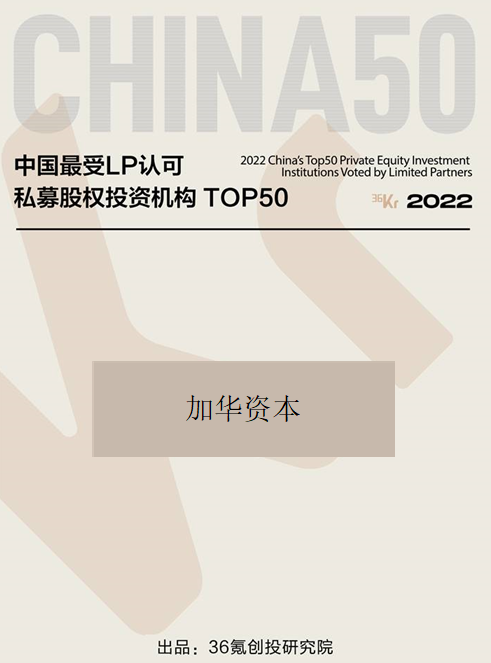
2022 China's Most LP-Recognized Local Investment Institution" TOP 50
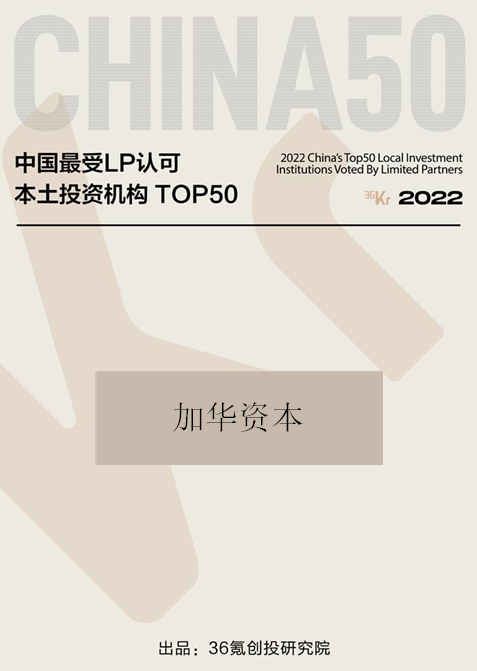
We thank them for this recognition. Harvest Capital will continue to adhere to consumer investment through practical actions, accompanying entrepreneurs and business leaders, remaining true to our original aspirations and forging ahead.
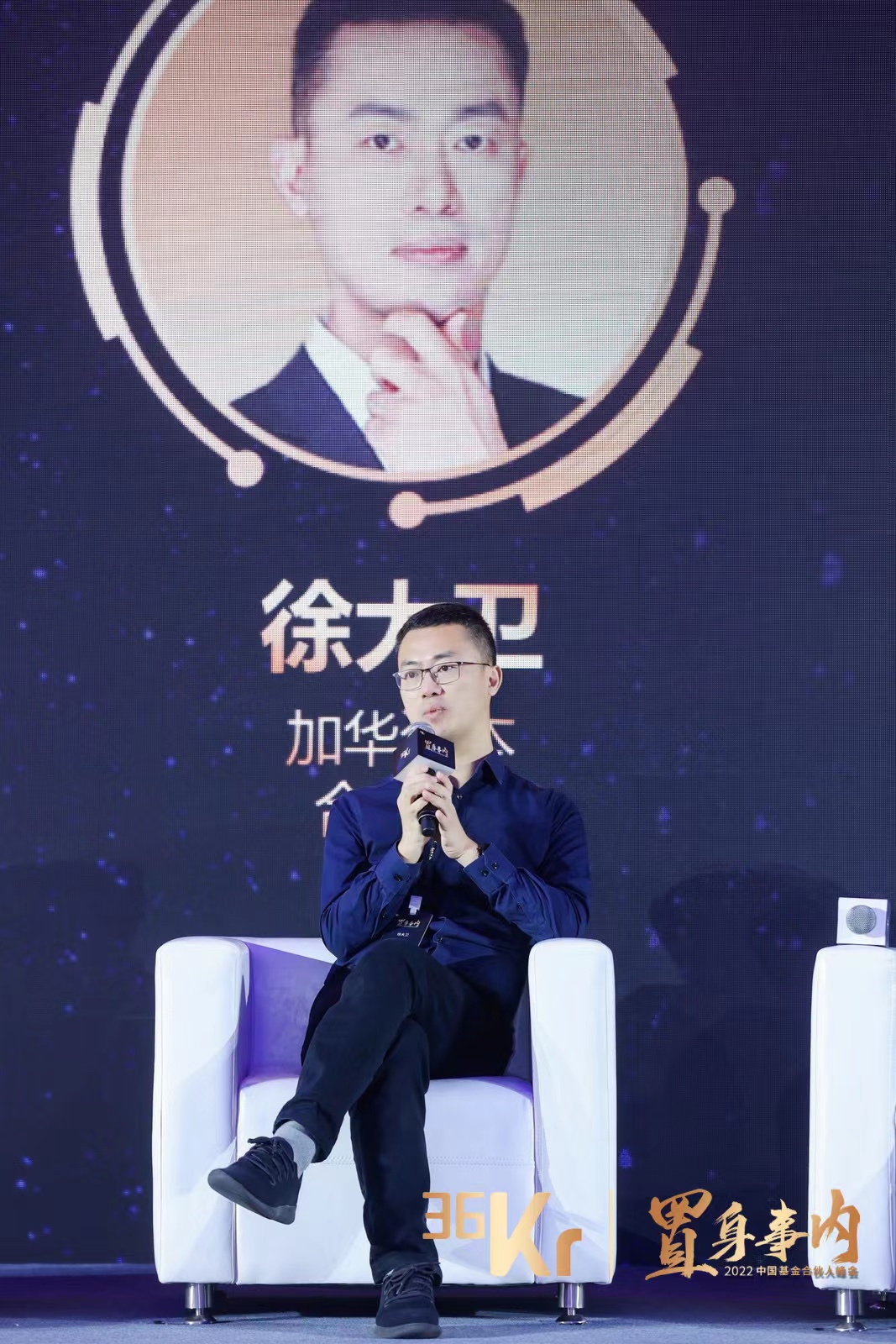
Below is the keynote speech by Xu Dawei, Partner of Harvest Capital, at the 2022 China Fund Partner Summit's "20 Years of Transformation for Local Institutions" session:
Hello everyone, I'm Xu Dawei, Partner at Harvest Capital. Harvest Capital is an investment institution established in 2007, vertically focused on the consumer sector. Since our establishment 16 years ago, we have consistently invested in consumption without crossing major tracks or boundaries.
Currently, we manage over RMB 26 billion in assets under management, having invested in a total of 30-40 projects, averaging 2-3 per year. We've invested in many first-stock companies in the consumer sector: in 2009, we invested in QiaqiaFood, the first stock in nuts and roasted seeds; Babi Food, the first stock in steamed buns; Eastroc Beverage, the first functional beverage stock domestically; Jiajia Food, the first soy sauce stock domestically; Laiyifen, the first snack chain stock, among others. Harvest Capital's characteristics are focusing on consumption, limited deals, and relatively large single-project investment scale. Additionally, we place great emphasis on post-investment—from a time and team resource distribution perspective, roughly 80% of our time and energy goes into the post-investment phase.
From our perspective, we have different insights into the development of Chinese local institutions. Some companies Harvest invests in are mature companies with 10-20 years of history. In our eyes, such companies are still quite young in the consumer track. China's GP industry has only developed for about 20 years—also very young. GP institutions often face many growth confusions as they enter their youth phase. We've reached where we are today with opportunities to discuss development because our fund has some persistent principles and characteristics:
1. Focus. For these 16 years, we've only looked at consumption. We know where our capability boundaries lie. A prerequisite understanding is that the consumer track is extremely large—sufficient for us to work on for a lifetime. Focus brings tremendous competitiveness because we only look at food, entertainment, and daily necessities. Using sixteen years, we've tightly bound our algorithms, computing power, and the industry together.
2. From day one, we've insisted on a leading-player strategy. In 2009, our first investment was Qiaqia Food, which was already the industry leader. This strategy is also extremely difficult behind the scenes. As I often tell colleagues, "We can't just see the duck swimming elegantly on water—the fact is, the paddling motion underwater is very hard work." We invest money in these companies with excellent cash flow, excellent profits, and industry-leading positions. The flip side isn't relying on relationships but on capability—relying on making these chairmen recognize that Harvest Capital can provide additional help to these industry-leading enterprises. Empowering enterprises is our second characteristic.
3. Every GP here today shares a common trait that got us to where we are: resisting temptation. Over these years, there have been various dividends, whether internet or hard-tech dividends. Consumption is a very interesting track. In the past two years, countless GPs suddenly rushed to invest in consumption—this was irrational. In such a hot-and-cold environment, being able to stick to principles and resist temptations from other industries is very important.
4. Today's theme is "being inside the matter." For these 16 years, we've always placed ourselves inside the matters of our portfolio companies, always defining ourselves as business partners of portfolio companies, co-creating with enterprises. Although we invest at the later PE stage, we still use a co-creative mindset to help enterprises grow and create value increments. These four points are why we've reached where we are today.
Purely from the perspective of macroeconomic environment conditions, in 2022, everyone present probably doesn't feel optimistic—there's more pressure. However, everything has two sides; fortune and misfortune are interdependent. Similarly, our consumer investment industry may also contain favorable factors beneath the pressure and internal competition.
We have this conclusion from studying global top consumer brands: truly leading brands basically grew in pressure environments. Look at Nike in America, Uniqlo in Japan, Dyson in the UK. Uniqlo was founded in 1984, and Japan subsequently entered the lost 30 years. The founder basically couldn't get VC money and even borrowed from banks at 10-20% interest rates during the oil crisis for company operations.
From a fundraising perspective, the current environment is cold. But from an investment perspective, now is a very good time—founders are calming down and won't blindly pursue high valuations. Because pursuing lots of funding that sits in accounts unable to be spent, or blindly investing in traffic after getting money, doesn't form substantive effective accumulation. From an investment perspective, the next few years represent a good window period. I also believe that in the next 5 to 10 years, China will see a batch of enterprises become world-class leading consumer brands.
From a fundraising perspective, there are certainly challenges, but equally opportunities. We see some market-oriented fund of funds, insurance companies, and family offices with long-term understanding of the consumer track and very solid foundations still seriously examining this track. This also poses more challenges for GPs. Like the projects we invest in, the cold environment requires practicing internal skills and building personalized and differentiated capabilities. This isn't necessarily a bad thing.
Related information


