

Milestones
The track related to 1.4 billion people is being underestimated? Consumer spending still has great potential.
Date: 2024-03-04Views:
Via丨CBN News
II. The Spring of Consumer Track Investment Is Near
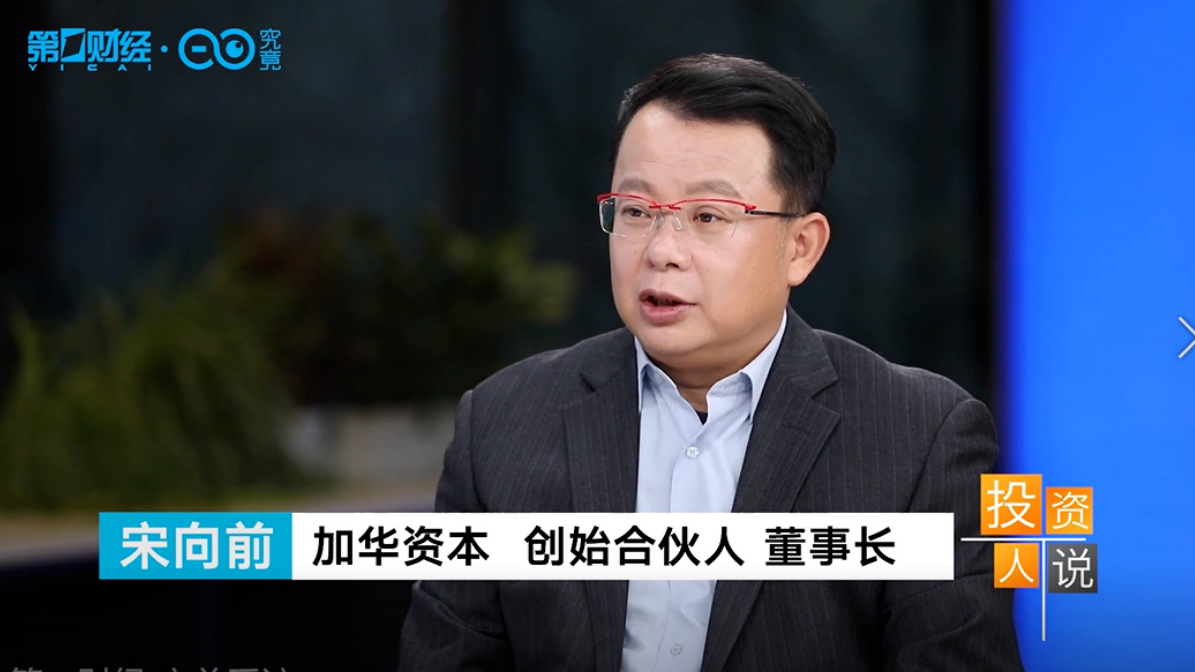
First Finance Interviewer Gao Yuan: Domestic demand's role in driving economic growth has reached 111.4%, an increase of 25.3 percentage points from the previous year. At such a moment, do you think investment institutions need to reconsider their perspectives on the consumer track?
Harvest Capital Song Xiangqian: First and foremost, there is no doubt that consumption is the most promising and optimistic track in China. In this process, we can see that there are institutions, similar to Harvest Capital, persisting in long-term investments in Chinese brands and the consumer sector. We focus on providing essential, high-frequency, and livelihood products with infrastructure capabilities that create consumer benefits and surplus for the masses.
I believe China's economy, consumption, and people's livelihoods need more good brands to emerge.
Secondly, traversing the cycle is crucial. To see it in the long term, the foundation and supporting role of Chinese consumption and the increasingly prominent role in economic growth need to be captured with a historical perspective. This opportunity requires a powerful and solid capability, not abandoning the future importance of this industry, and will be recognized by more institutions.
I believe the spring of consumption is not far away, and more institutions will pick up investments in this core main track, supporting the rise of Chinese brands and the driving force of Chinese domestic demand.
The essence of driving domestic demand lies in the increase of people's per capita disposable income and purchasing power. The implementation of this plan for doubling national income needs to be carried out consistently over decades to thoroughly activate China's domestic demand and consumption. It requires persistent efforts.
III. Livestreaming Sales by Influencers Is Not the Entirety of the Chinese Economy
First Finance Interviewer Gao Yuan: Currently, all consumer companies want to transform towards influencer-led sales. Do you think there is an optimal model between the physical economy and livestreaming sales to promote better development and integration of both sides?
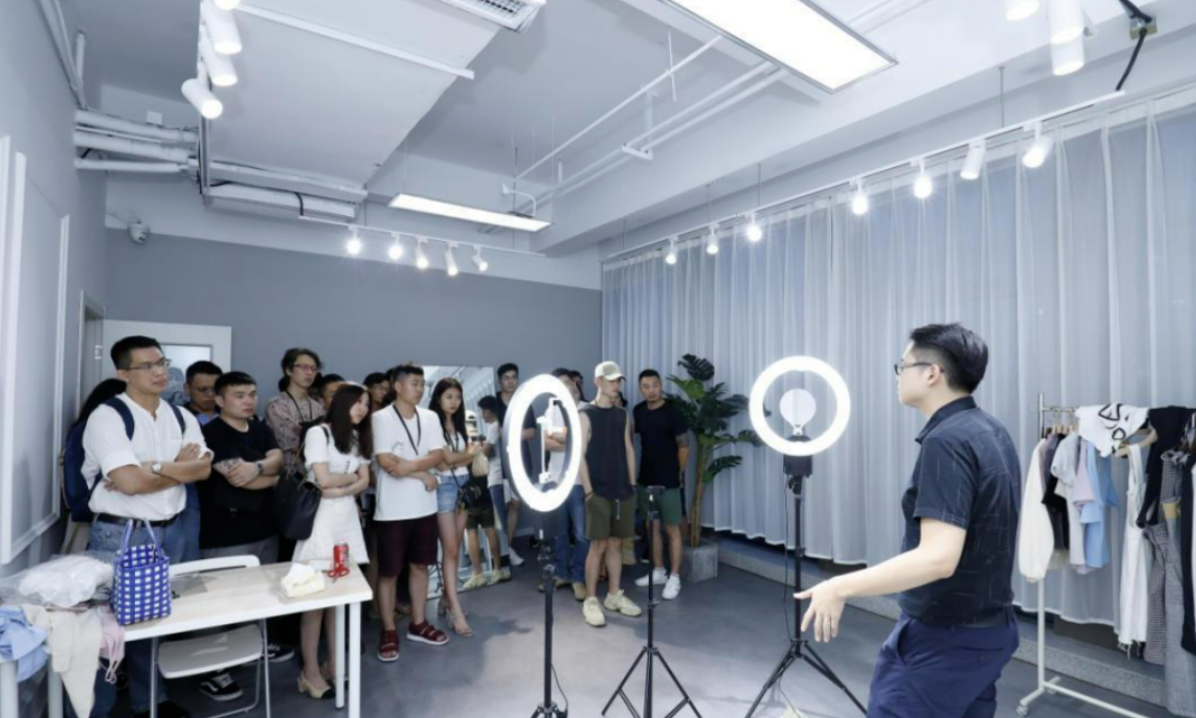
Harvest Capital Song Xiangqian: Of course, there will be. Firstly, livestreaming sales and the current influencer economy are essential expressions in the attention economy, gaining significant market attention and playing an important role in the current transformation of new channels. However, it cannot be denied that it is just one model in the current transformation of new channels. It cannot represent the future development of China's economic development or the entirety of the development of each category and brand.
Secondly, concepts cannot be replaced. We cannot think that the attention economy, traffic economy, and livestreaming sales represent the entirety of China's economic development. Even with platforms like Pinduoduo surpassing Alibaba, we cannot assume that Pinduoduo's model, the sinking world, and a low-desire society represent the entirety of China's economy. That's not the case. These may just be some challenges, temporary difficulties, and characteristics of the times faced at the current stage. However, this does not represent the entirety of China's economy.
I believe the future development of China's economy will still move towards cost-effective products, towards essential needs in the mass consumer life, towards the aspirations for a better life for our ordinary citizens, and towards resolving the contradiction of imbalances and insufficiencies in productivity.
Solving these difficulties requires industrial upgrades, and the real industry is the true engine of national prosperity. Therefore, technology and finance ultimately serve the real industry, and technology ultimately serves consumption and people. The principles are the same. From this perspective, I personally strongly support the development of China's real industry, the development of Chinese consumption, the integration of Chinese technology and consumption, and the continuous empowerment of China's consumption with new channels, new brands, and new technological applications during this process.
Someone once said that traditional consumption deserves to be redone, but I would like to ask, how many of us really know what it means to redo traditional consumption and how to do it? This requires generations of Chinese entrepreneurs, brand owners, and entrepreneurs to make continuous efforts. Based on industrial internet, truly rooted in the lifetime value of consumers, with people as the basic needs, we can create a set of Chinese-style enterprise management and culture, create our own Chinese brands, provide better products and services for the Chinese people, and produce enough high-quality products that are both excellent and affordable.
IV. The Proliferation of the "Refund without Return" Model Will Distort Supply and Demand Relations
First Finance Interviewer Gao Yuan: You mentioned the Pinduoduo model earlier, and we also know that platforms like JD.com and Taobao are implementing the "refund without return" model. Will such a model become the main model for future Chinese e-commerce? Are there any risks involved?
HarvestCapital Song Xiangqian: I don't think it will. This approach certainly has its risks. The refund-only model seems to satisfy the lifetime value of consumers, respecting customers and conducting some beneficial exploration. However, if the refund-only model spreads on a platform without strict review, it can distort supply and demand relations, as well as the basic principles of economic exchange of equivalent value for goods. This can have some adverse effects on business.
Therefore, I think this is a societal practice movement, and we need to give time to find answers. It is also a product with some controversy. Good platforms can use it well, but if the platform's control ability, audit mechanism, and the balance of rights between consumers and product providers are not fair enough, it can have a counterproductive effect. So, you can see that some small shops on Pinduoduo face considerable challenges and impacts, causing difficulties for industrial upgrading and some small and medium-sized merchants.
I believe that while this model, from a certain perspective, respects consumers, taking one step further might exploit human weaknesses to do business. This can easily disturb the overall business environment and order in society.
V. Zibo's "Harbin" Blooms - Chinese Cities Moving Towards Sustainable Operations
First Finance Interviewer Gao Yuan: Last year, there was Zibo barbecue, and this year, there's the Harbin Ice Festival, which has become a hot topic on the internet. Some people believe that the era of local consumer IPs in China has arrived, but there's a concern about whether it can be sustained. From this perspective, can you offer some advice?
Harvest Capital Song Xiangqian: I think this is a good phenomenon, indicating that as China's urbanization process comes to an end, urban operators and leaders are beginning to consider the high-quality development and sustainable operation of cities, moving towards IP, scenarios, and experiences.
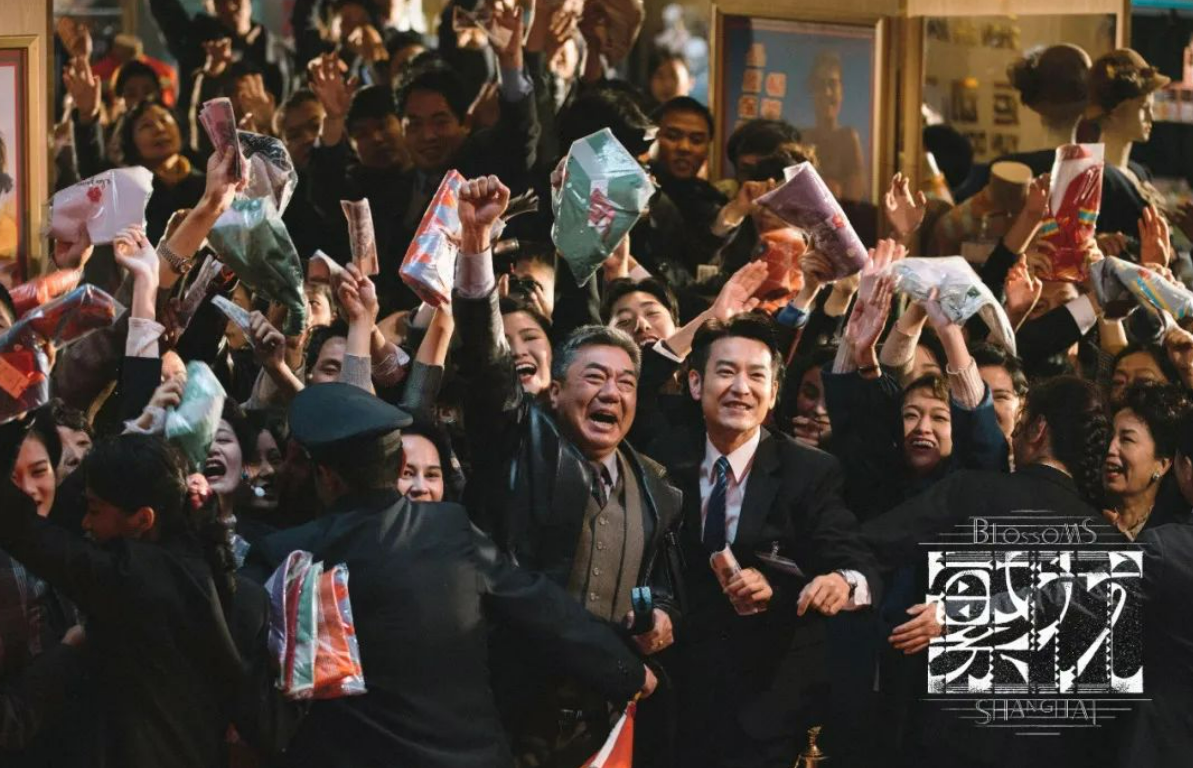
Zibo barbecue, the popularity of the Harbin Ice Festival, and even the success of Wong Kar-wai's film "Blossoms Shanghai" indicate that urban operators are seriously considering how to effectively manage and operate a city, making the city more vibrant and making people more empathetic towards the city's characteristics, culture, and life.
I believe that Chinese cities are entering a stage of urban operation, which is a natural progression of urbanization development and is a very positive situation. We don't need to worry about its sustainability because starting is always better than not starting, and operating is always better than not operating. We should encourage more cities like Zibo, Harbin, and Shanghai to invest in urban operations, empower people's lives, immerse themselves in the hustle and bustle of life, and I believe that China's cities will become more charming and carry more of the flavor of human life. Because the greatest politics is livelihood, and the greatest satisfaction is the happiness of people's lives.
VI. There's No Greater Business Than "Ensuring 1.4 Billion People Eat Well"
First Finance Interviewer Gao Yuan: Harvest Capital has also invested in a chain restaurant brand, with a cumulative investment of 500 million yuan in this project. I found that the average customer spending in this business is between 50 and 100 yuan. The competition in this market is intense, and many enterprises have not gone very far. I would like to know how you see the future growth trend of such enterprises?
Harvest Capital Song Xiangqian: This enterprise is a leader in mass-market and convenient dining, not considered a formal meal, and it's not what is commonly seen as the so-called new Anhui cuisine in the media. In fact, it has very few elements of Anhui cuisine. We define this company as a leader in mass-market and convenient dining.
Its first feature is that the average customer spending is relatively cheap, averaging around 60 to 80 yuan per person. In a situation of consumption sinking and insufficient effective demand, our goal is to create a better consumption experience for ordinary people, provide better consumption scenarios, and create higher satisfaction.
So far, it has reached over 530 operating stores, and its revenue has surpassed its peers. In the future, we will certainly continue to expand in the community catering sector, becoming a beneficial complement to the people's canteen. There's no greater business than ensuring 1.4 billion people eat well.
First Finance Interviewer Gao Yuan: Let me ask a question on behalf of investors. People might think that most chain enterprises now make money mostly by relying on the capital market. If in the future, after rapid expansion nationwide, its profits will rely more on the capital market to ensure its daily operations, and it can focus more on product development. Can this be understood in this way?
Harvest Capital Song Xiangqian: No, that's not accurate. We are actually engaged in real industries, so we don't pay much attention to the returns of the capital market. I believe that if you do things right, economic achievements will naturally follow.
We are all engaged in down-to-earth industrial operations. Today, there is no premium from the capital market, nor are there any opportunities for capital market arbitrage. The only way for capital's orderly expansion is to work solidly on industrial development, cultivate the lifetime value of Chinese consumers, cultivate Chinese industry, and cultivate Chinese brands. Only in this way can we win the compounding value of time, win the future business competition, and meet the overall needs of the country's future development. This is the essence of high-quality economic development and the correct path that must be taken to build a modern China.
VII. Is the Biggest Competitor for Chain Coffee Brands Coming from Chain Restaurants?
First Finance Interviewer Gao Yuan: One of your previous investments is the chain restaurant brand, Laoxiangji. It is now planning to launch the Laoxiang Tea Coffee service. For the future of China's chain coffee brands, is their biggest competitor coming from these chain restaurant brands? Does this trend bring more innovative choices for operating throughout all hours?
Harvest Capital Song Xiangqian: Yes, that's a good question. Food and drink have always been closely linked, so we can see various formats merging now. Coffee shops are starting to sell baked goods, wraps, and even buns.
As you know, I've also invested in Babimantou and Laoxiangji, both leading enterprises in Chinese fast food. Laoxiangji introducing products like tea coffee and entering this track is not surprising. After all, it has over 1,000 self-operated stores, serving hundreds of millions of Chinese people every year, providing products and services to meet their consumption needs. So, offering coffee, and even cocktails and small bars in Shenzhen, is a beneficial exploration, all revolving around satisfying the valid needs of users. From this perspective, brands should do this.
Of course, everyone should focus on their expertise. We are fundamentally a fast-food enterprise. Many coffee chain enterprises and coffee product-oriented enterprises mainly focus on coffee rather than dining. There are paths for both integration and independent development in the development journey. I personally emphasize specialized development. With a focused approach, you can achieve professionalism, concentration, and the resulting value.
First Finance Interviewer Gao Yuan: Mr. Song, you haven't actually missed the coffee track. You've participated in it in a different way.
Harvest Capital Song Xiangqian: Yes, through continuous observation and accumulation, we need to accumulate relevant knowledge to observe the market's performance, understand real consumer demands, and comprehend more perfect business models. Starbucks, for example, succeeded in the past because it could offer a "third space." Simply copying others is challenging, as the conditions differ in various scenarios and contexts.
Secondly, to surpass others, you also need to engage in more practices in the business. Even though coffee is popular, especially among young people (I myself enjoy coffee), the competition in the track is just starting. There are significant opportunities, and not making a move now doesn't mean there won't be opportunities in the future. I believe the best competition strategy is to be well-prepared.
Related information


